
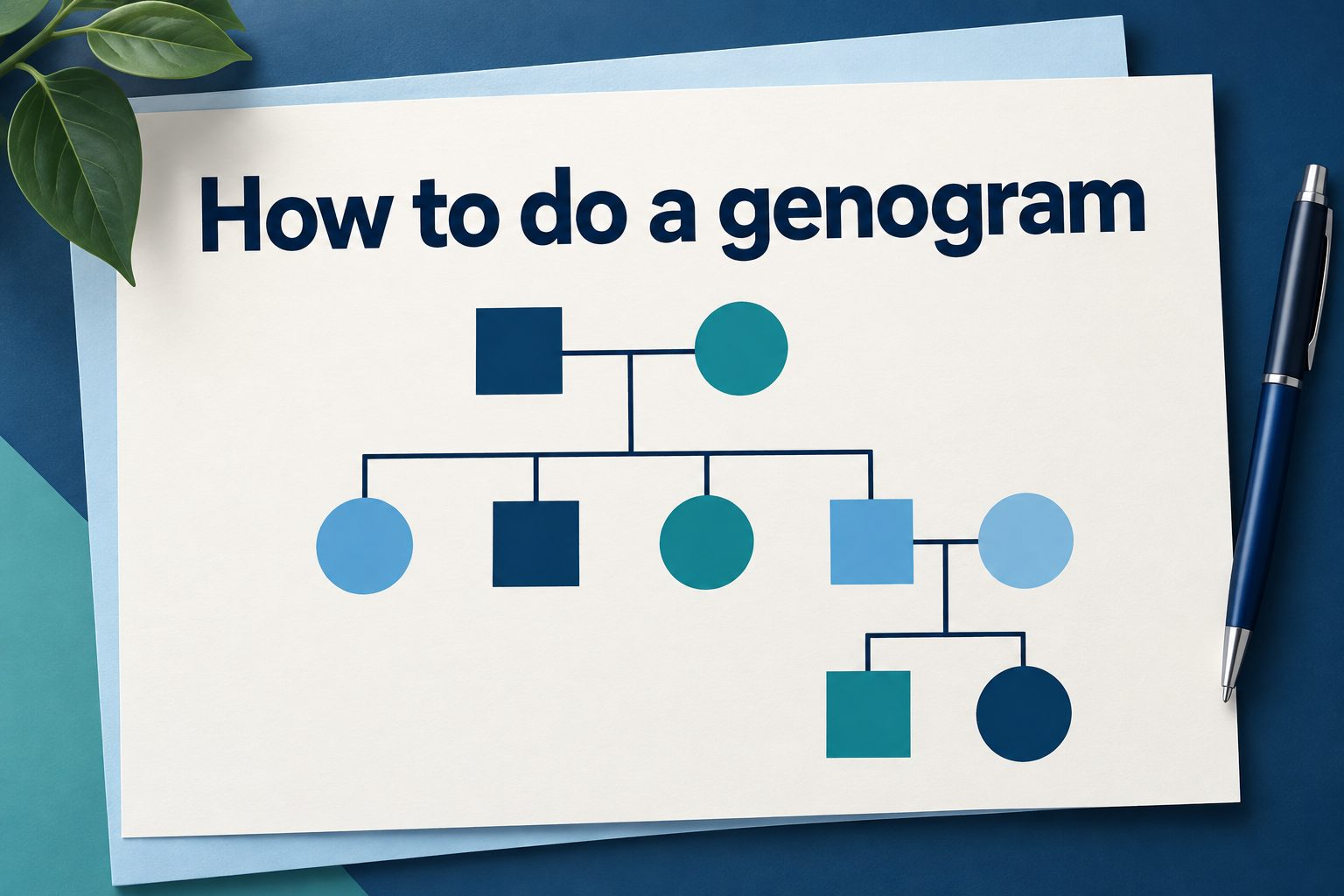
Learning how to do a genogram can help you see a family as more than a list of names and dates. A genogram is a visual map that shows relatives, major life events, health information, and the quality of relationships across generations. It resembles a family tree, but it offers much deeper insight into patterns that may influence individuals and the wider family system. Counselors, healthcare professionals, social workers, educators, researchers, and families use genograms for different purposes. You might create one to explore inherited medical risks, understand repeated relationship difficulties, document family history, or prepare for a therapy session. Although the symbols can seem complicated at first, the process becomes manageable when you gather information carefully and build the diagram in stages. This guide explains the meaning and value of a genogram, the symbols you need, a practical creation process, useful examples, common mistakes, expert tips, and answers to frequently asked questions.
What A Genogram Shows
A genogram organizes family information in a visual form. Standard symbols represent people, while lines show biological, legal, household, and emotional connections. Most genograms cover at least three generations, although the appropriate scope depends on the purpose of the diagram.
Unlike a basic family tree, a genogram can record divorces, adoptions, miscarriages, illnesses, occupations, migration, substance use, and significant losses. It can also show whether two relatives have a close, distant, conflicted, or estranged relationship.
This combination of factual and relational information makes recurring patterns easier to notice. A family may discover repeated heart disease, early bereavement, interrupted education, difficult partnerships, or strong caregiving roles that appear in several generations.
A genogram does not prove why a pattern exists. Instead, it provides a structured picture that can support better questions. It may reveal areas that deserve further conversation, professional assessment, medical screening, or historical research.
The best genogram is not necessarily the largest one. It is the diagram that records relevant information clearly, distinguishes facts from assumptions, and serves a defined purpose without exposing unnecessary private details.
Why Creating A Genogram Is Useful
Creating a genogram can support personal reflection and professional assessment. Its main benefits come from placing related information in one organized view.
- Reveals Family Patterns: Repeated experiences and behaviors become easier to recognize across generations.
- Supports Health Discussions: Medical conditions can be mapped to identify possible inherited risks worth discussing with a clinician.
- Improves Therapy Context: Counselors can see important relationships, losses, conflicts, and sources of support more quickly.
- Preserves Family History: Names, dates, migrations, occupations, and major events can be recorded before they are forgotten.
- Encourages Better Questions: Missing details and surprising patterns often suggest useful topics for respectful family conversations.
- Clarifies Support Networks: The diagram can show who provides practical care, emotional support, or stability during difficult periods.
Genogram Symbols And Relationship Lines
Consistent symbols make a genogram readable. A legend should be included whenever the diagram uses specialized, customized, or unfamiliar marks.
1. Individual Symbols
A square commonly represents a male and a circle commonly represents a female. Some systems provide additional symbols for nonbinary identities or unknown information. Write the person’s name near the symbol and add birth and death dates when they are relevant and known.
2. Partnership Lines
A horizontal line between two people generally represents marriage or partnership. Separation and divorce are usually shown by one or two diagonal marks across that line. Add dates when timing matters, especially if the family includes several partnerships or blended households.
3. Parent And Child Lines
A vertical line descends from a partnership line to the children. Siblings are normally arranged from oldest to youngest, moving from left to right. Adoption, fostering, pregnancy loss, and twin births may use distinctive line styles or symbols explained in the legend.
4. Death Indicators
A diagonal cross through an individual’s symbol commonly indicates that the person has died. The year or full date of death may appear nearby. When appropriate, a brief note can identify the cause without crowding the diagram or disclosing unnecessary sensitive information.
5. Emotional Relationship Lines
Different lines can show closeness, conflict, distance, estrangement, abuse, or an unusually dependent relationship. Conventions vary, so the legend matters. Emotional lines should reflect reliable information and a defined period rather than presenting one person’s interpretation as permanent fact.
6. Health And Life Event Marks
Colors, shading, abbreviations, or notes may represent medical diagnoses, mental health conditions, addiction, occupations, migration, or traumatic events. Choose only categories connected to your purpose. Too many visual codes can obscure the important patterns instead of making them clearer.
How To Do A Genogram Step By Step
A clear process prevents the diagram from becoming confusing. Complete the basic family structure before adding detailed health or relationship information.
- Define The Purpose: Decide whether the genogram will explore medical history, relationships, therapy concerns, genealogy, or another focused question.
- Select The Generations: Include at least three generations when possible, usually grandparents, parents and their siblings, and children.
- Gather Reliable Information: Collect names, dates, partnerships, children, deaths, major events, health conditions, and household details.
- Draw The Central Person: Begin with yourself, a client, or another focus person and place that symbol near the center.
- Add Family Structure: Connect parents, siblings, partners, children, and extended relatives using consistent standard lines.
- Record Relevant Details: Add only the health, social, cultural, and historical information connected to the genogram’s purpose.
- Map Emotional Relationships: Show close, distant, conflicted, estranged, or supportive connections when there is enough evidence.
- Create A Legend: Explain every color, abbreviation, symbol, and nonstandard line so another reader can interpret the diagram.
- Review And Update: Check facts, mark uncertain information, correct clutter, and revise the genogram when circumstances change.
How To Gather Genogram Information
The quality of a genogram depends on the quality of its information. These approaches help you collect useful details while respecting uncertainty and privacy.
1. Begin With Known Facts
Start with information you can confirm, including full names, approximate ages, birth dates, partnerships, children, and deaths. Building a reliable structural outline first makes later research easier and reduces the chance that guesses become embedded in the diagram as established facts.
2. Interview Several Relatives
Different relatives remember different parts of family history. Ask open questions and compare accounts without turning disagreements into arguments. One person may remember dates, while another recalls household roles, migration stories, health problems, or the emotional effect of an important family event.
3. Consult Family Records
Birth announcements, obituaries, certificates, photographs, letters, journals, and family documents may confirm names and dates. Treat private records carefully and obtain permission where appropriate. A document can support factual accuracy, but it may not explain the emotional meaning of an event.
4. Ask Focused Questions
Questions should match your purpose. For a health genogram, ask about diagnoses and ages of onset. For a relationship genogram, explore caregiving, conflict, separation, and support. Focused questions produce more useful information than attempting to document every detail about every relative.
5. Mark Unknown Information
Do not fill gaps with convenient assumptions. Label information as unknown, uncertain, approximate, or reported by a particular person. Honest gaps improve credibility and show where further research may help. They also prevent sensitive family stories from being treated as verified evidence.
6. Respect Personal Boundaries
Relatives may decline to discuss adoption, illness, trauma, addiction, identity, or conflict. Explain why you are asking, allow them to skip questions, and avoid pressure. Ethical information gathering is more important than creating a perfectly complete picture of the family.
Examples Of Genogram Patterns
Examples show how a completed genogram can turn scattered facts into useful observations without claiming that correlation automatically proves a cause.
1. Repeated Medical Conditions
A health-focused genogram might show diabetes affecting a grandparent, two adult children, and a grandchild. This pattern could support a conversation with a qualified clinician about screening and prevention, but the diagram itself should never be treated as a medical diagnosis.
2. Recurring Relationship Conflict
A relational genogram may reveal intense conflict between parents and eldest children in several generations. The pattern can guide questions about expectations, authority, communication, and caregiving. It should invite exploration rather than assign blame to one person or family branch.
3. Strong Caregiving Roles
The diagram might show that one person in each generation becomes the main caregiver for children, older relatives, or family members with disabilities. Recognizing this pattern can highlight resilience and commitment while also revealing possible stress, unequal responsibility, or limited support.
4. Migration And Separation
A family history genogram may record repeated migration, long-distance partnerships, or children living with extended relatives. Adding dates and locations can clarify how economic conditions, conflict, education, or employment shaped family roles and influenced emotional closeness over time.
5. Education And Career Paths
Recording education and occupations might reveal several generations working in healthcare, farming, teaching, or a family business. Such patterns may reflect shared values and opportunity, but they can also reveal expectations that affected how individuals made important life choices.
6. Loss Across Generations
A genogram may show deaths, pregnancy losses, abandonment, or other disruptions occurring at similar life stages. Seeing these experiences together can help explain family fears, traditions, and protective behavior. Sensitive losses should be recorded only when relevant and handled with compassion.
Practical Uses For A Genogram
Genograms serve different purposes depending on which information is selected and how the finished diagram is interpreted.
1. Personal Family Reflection
Individuals can use a genogram to explore family identity, inherited stories, important relationships, and turning points. The activity may reveal both strengths and difficulties, helping a person appreciate supportive connections without ignoring unresolved conflict or painful experiences.
2. Counseling And Family Therapy
Therapists may use genograms to explore attachment, communication, grief, boundaries, and repeated behavior. The visual overview helps organize complicated histories, but it remains a collaborative assessment aid. Meanings should be discussed with the client rather than imposed by the professional.
3. Medical History Review
Families can map conditions such as heart disease, cancer, diabetes, or certain mental health concerns. Ages of diagnosis and death can add useful context. A healthcare professional should evaluate possible risks because a genogram cannot replace examination, testing, or clinical advice.
4. Social Work Assessment
Social workers may map household members, caregivers, absent relatives, conflict, and available support. This can clarify where practical help exists and where stress is concentrated. Information should remain relevant to the assessment and be protected according to professional confidentiality requirements.
5. Genealogy And Family History
Genealogy focuses heavily on names, dates, places, and ancestry, while a genogram adds relationships and patterns. Combining these perspectives can create a richer family record that preserves both documented history and the social experiences that shaped different generations.
6. Education And Professional Training
Students in counseling, nursing, psychology, and social work may create genograms to practice systems thinking. A training diagram should still protect privacy. Fictional names, altered details, or a supplied case study may be more appropriate than exposing sensitive information about real relatives.
Common Genogram Mistakes To Avoid
Small errors can make a genogram misleading or difficult to read. Careful choices improve both accuracy and usefulness.
1. Starting Without A Clear Purpose
Trying to record everything produces a crowded diagram with no obvious message. Define the central question before collecting details. A focused purpose helps you decide which people, events, health conditions, and relationship patterns belong in the genogram and which can be omitted.
2. Mixing Symbols Without A Legend
Symbols vary among professions, software tools, and textbooks. Mixing several systems without explanation makes interpretation unreliable. Choose one convention, apply it consistently, and include a simple legend that explains every color, line, abbreviation, and customized mark used in the diagram.
3. Presenting Assumptions As Facts
Family stories often contain incomplete memories, conflicting accounts, and personal interpretations. Record the difference between confirmed facts and reported perceptions. A useful genogram acknowledges uncertainty instead of giving an unsupported claim the same visual authority as a documented date or relationship.
4. Adding Too Much Information
Dense notes, excessive colors, and numerous relationship lines can make important patterns disappear. Include details that serve the stated goal and place supporting notes elsewhere if necessary. Readability is essential because a genogram must communicate its information, not merely store it.
5. Ignoring Privacy And Consent
A genogram may contain medical, relational, and traumatic information that relatives did not expect to be shared. Limit access, store the diagram securely, and obtain permission before presenting it publicly. Professional users should follow applicable ethical, organizational, and confidentiality standards.
6. Treating Patterns As Proof
A repeated feature does not establish a diagnosis or a single cause. Family experiences are shaped by biology, culture, environment, opportunity, and individual choices. Use patterns to form thoughtful questions, then seek appropriate evidence or professional guidance before reaching important conclusions.
Best Practices For A Clear Genogram
A well-designed genogram balances detail, accuracy, sensitivity, and visual clarity. The following practices make the finished diagram easier to use.
1. Keep The Focus Person Central
Place the main person or family near the center and build outward by generation. This creates a visual anchor and helps readers follow connections. If the family structure is especially large, emphasize the focus person with a consistent nonintrusive mark explained in the legend.
2. Arrange Generations Consistently
Keep members of the same generation on approximately the same horizontal level. Arrange siblings in birth order when possible and leave enough space for partners and children. Consistent placement allows readers to recognize the family structure before examining detailed annotations.
3. Separate Facts From Interpretations
Names, dates, and legal relationships are different from opinions about closeness or conflict. Label the source or timeframe of subjective information when necessary. This distinction is especially important when relatives disagree or when the genogram contributes to a professional assessment.
4. Use Color With Restraint
Color can distinguish medical conditions, households, or family branches, but too many colors reduce clarity. Choose a small palette and never rely on color alone. Labels or patterns help people who view a printed copy or have difficulty distinguishing particular colors.
5. Review The Diagram Collaboratively
When appropriate, invite the focus person or family to examine the draft. They may identify missing relatives, incorrect dates, or unfair interpretations. Collaborative review also helps people explain what particular relationships and events mean from their own perspective.
6. Update Important Changes
Families change through births, deaths, partnerships, diagnoses, moves, and reconciliation. Add a creation or revision date and update the diagram when it supports ongoing work. Keeping older versions may also show how family structure and relationships changed over time.
Advanced Tips For Genogram Analysis
Once the basic map is complete, deeper analysis can reveal connections that are difficult to notice in a simple list of relatives.
1. Compare Similar Life Stages
Look at what happened to different relatives at comparable ages, such as leaving home, becoming a parent, or experiencing loss. Similar timing may suggest useful questions about expectations and transitions, although it should not be interpreted as destiny or prediction.
2. Track Patterns Across Three Generations
A behavior found in one household may be temporary, while recurrence across several generations deserves closer attention. Compare patterns without assuming they have identical causes. Social conditions and opportunities can change dramatically even when the visible outcome appears similar.
3. Include Protective Factors
Do not map only problems. Record stable relationships, mentors, cultural traditions, community ties, educational opportunities, recovery, and successful coping. Protective factors show how family members managed adversity and can reveal resources that remain useful in the present.
4. Note Major Historical Context
War, migration, discrimination, economic hardship, epidemics, and social change can reshape family decisions and relationships. Adding brief contextual notes prevents individual behavior from being separated from the conditions surrounding it and supports a fairer interpretation of past choices.
5. Observe Roles And Alliances
Notice who becomes a mediator, caregiver, decision-maker, outsider, or source of emotional support. Also look for alliances that cross generations. Roles can provide stability, but rigid roles may limit personal choice or place disproportionate pressure on particular family members.
6. Develop Questions From Patterns
Turn each observation into a neutral question. Instead of declaring that conflict is inherited, ask how disagreement was handled in different generations. Neutral questions reduce blame, leave room for alternative explanations, and make the genogram a starting point for productive exploration.
Genogram Review Checklist
Use this short checklist before considering the diagram complete or sharing it with another person.
- Purpose: Confirm that every major detail supports the reason for creating the genogram.
- Structure: Check names, generations, partnerships, sibling order, children, and household connections.
- Accuracy: Mark disputed, estimated, reported, and unknown information instead of presenting it as confirmed.
- Consistency: Apply the same symbols, line styles, colors, labels, and date formats throughout.
- Readability: Remove unnecessary details, untangle crossing lines, and provide adequate spacing between symbols.
- Privacy: Protect sensitive information and confirm that any planned sharing is appropriate and permitted.
Frequently Asked Questions
How Many Generations Should A Genogram Include?
Most genograms include at least three generations because this range makes recurring patterns easier to see. A typical diagram covers grandparents, parents and their siblings, and children. You can include more generations when reliable information is available and the added detail directly supports your purpose.
Can I Make A Genogram By Hand?
Yes. Paper and pencil work well for a small or early draft, and sticky notes can help you rearrange relatives before drawing final lines. Digital tools are more convenient when the family is large, frequent updates are expected, or a polished copy is required.
What Is The Difference Between A Genogram And A Family Tree?
A family tree mainly records ancestry and biological or legal relationships. A genogram can include the same structure but adds health conditions, major life events, household arrangements, and emotional relationships. It is therefore more useful for analyzing patterns, not simply documenting descent.
Do I Need Professional Software To Create A Genogram?
No. You can create a useful genogram with paper, presentation software, diagramming tools, or specialized applications. The best option depends on complexity, privacy, collaboration, and editing needs. Consistent symbols and accurate information matter more than the particular tool you choose.
Is A Genogram A Diagnostic Tool?
A genogram can support clinical assessment, but it cannot independently diagnose a medical or mental health condition. It organizes reported information and highlights possible patterns. Diagnosis requires qualified professional evaluation, appropriate evidence, and consideration of factors that a family diagram may not capture.
How Should Sensitive Information Be Handled?
Collect only information relevant to the purpose, explain how it will be used, and respect a person’s choice not to answer. Store the genogram securely and restrict sharing. In professional settings, follow applicable confidentiality, consent, recordkeeping, and data protection requirements.
How Often Should A Genogram Be Updated?
Update it whenever an important change affects its purpose, such as a birth, death, diagnosis, partnership, separation, move, or major relationship shift. For ongoing clinical or social work use, add review dates so readers know whether the information reflects current circumstances.
Conclusion
Knowing how to create a genogram gives you a practical way to organize family structure, health history, significant events, and emotional relationships. Begin with a clear purpose, map at least three generations, use consistent symbols, distinguish confirmed facts from interpretations, and include only information that contributes to the main question.
A thoughtful genogram should encourage curiosity rather than judgment. Review it for accuracy, readability, relevance, and privacy before sharing it. When used carefully, the finished diagram can preserve valuable history, reveal meaningful patterns, improve family conversations, and support more informed discussions with qualified professionals.